Freezer columns and freezer drawers
Sub-Zero freezer repair, starting with the ice cream
Long before a display flashes a warning, the contents of a freezer start telling tales. A pint that scoops too easily, cubes that seem to shrink, a fur of frost on the peas: each points toward a particular part of the machine. This page translates those clues, covers rescuing the groceries in the meantime, and explains how our technicians pin down the fault for a single $89 visit charge.
4.8 of 5 tallied across 187 reviews Where the score comes from
Clues from the freezer shelves
Everyday signs, matched with what most often produces them. They narrow the search; the readings on the day settle it.
-
A pint of ice cream yields to the spoon the moment it leaves the drawer
The compartment is drifting warm, frequently because lint coats the condenser, a fan has lost speed, or the control has wandered off its setpoint
-
Ice cream that thawed and refroze, gritty with crystals
Temperature swinging up and down over days, the signature of a defrost cycle overstaying its welcome or a drawer that stops just shy of sealing
-
A white fur of frost on every package
Moist air finding its way inside, most often around a gasket gone stiff, split, or weak in its magnetic hold
-
Cubes in the bin getting smaller and cloudier
Slow sublimation in a freezer that runs too warm, or air movement problems around the ice maker
-
A sheet of ice forming under the lower drawer
Melt from the defrost cycle, meant to exit by the drain, freezes again inside the cabinet, pointing to a blocked or frozen drain path
-
The fans are silent and the back panel is caked white
Ice has encased the evaporator because the defrost heater, the sensor timing it, or the board in charge has quit
-
A temperature alarm that keeps sounding
The freezer has genuinely warmed, or a sensor is misreporting; a probe thermometer tells which
What to do with the food today
A freezer losing ground sets a clock running on everything inside. These moves slow that clock.
-
Keep the doors shut
Every peek swaps cold air for warm, humid kitchen air. Plan what you need, open once, grab it and push the door home.
-
Put a thermometer inside
A cheap dial or digital appliance thermometer set on a central shelf gives an honest number, which matters more than the display when you decide what to keep.
-
Group the frozen food together
Packed tightly, frozen items hold their cold longer. Move them toward the back, away from the door seal.
-
Borrow cold if you have it
A garage freezer, room in a neighbour's, or an insulated chest with frozen gel packs can shelter the precious things until the visit.
-
Keep a short log
Note when the softening started, any alarms and any sounds. Those details shorten the diagnosis.
Why is my Sub-Zero freezer not freezing?
Lint blanketing the condenser, a gasket past its prime, an evaporator encased in ice once defrost has failed, a fan that has stopped, or a control or compressor fault explain most cases. Clear the grille, make sure each drawer shuts snugly, and let probe readings reveal the guilty part.
Deciding what to keep
How cold should a Sub-Zero freezer be?
Sub-Zero's own guides point to zero degrees Fahrenheit for the freezer, which matches general food-safety advice for frozen storage. Confirm the recommended setting in the guide for your model. If the display shows that figure but your thermometer reads warmer, the control or the sealed system deserves a closer look.
A freezer column or the freezer of a combination unit
Sub-Zero builds freezers two ways, and the difference changes both the clues and the likely faults.
Specimen A
Freezer column
- A dedicated full-height freezer, often installed next to a matching refrigerator column
- Its own cooling system, so a fault here leaves the neighbouring refrigerator column unaffected
- Usually carries its own ice maker inside
- Large volume, so a warming column can take a lot of food with it
Specimen B
Combination unit freezer
- The freezer section of a side-by-side or over-and-under model
- On many models it has its own cooling separate from the fresh-food side, so the two can fail independently
- Frost and drain problems often show up in the drawer or below it
- Shares a cabinet, a control panel and installation access with the refrigerator
In both cases, the fact that one side of the kitchen is still cold proves nothing about the other. Our note on dual refrigeration explains why, and refrigerator repair covers the fresh-food side.
Why does frost keep building up in my Sub-Zero freezer?
Frost builds when moisture gets in or when it is not removed. A hardened or torn door gasket admits humid air; a failed defrost heater, sensor or control leaves ice on the evaporator; a blocked drain refreezes meltwater inside. Where the frost appears usually shows which of these is at work.
Frost, defrost and the ice nobody asked for
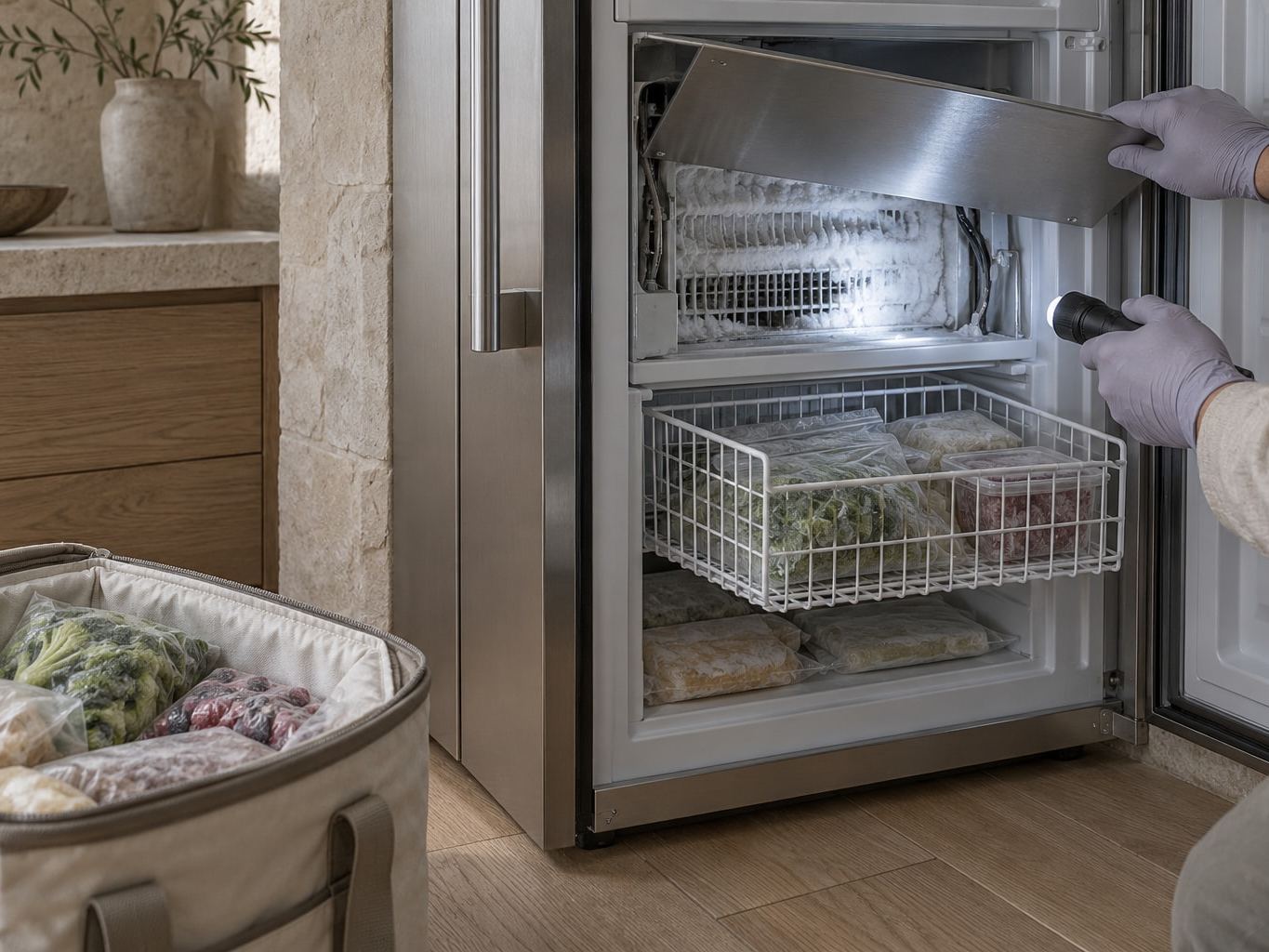
A frost-free freezer is not actually free of frost. Moisture freezes onto the evaporator coil all the time, and a defrost system periodically warms that coil just enough to melt it away and send the water down a drain. Break any link in that sequence and the evidence soon appears. A defrost heater that has quit, or the sensor and control that schedule it, lets the coil grow a thick white jacket that eventually blocks the airflow altogether. The fan keeps turning, but the cold stays trapped, and the compartment warms while the compressor keeps working.
The drain is the other common weak point. If it clogs or freezes, meltwater collects and refreezes as a sheet under the bottom drawer or a ridge along the floor of the compartment. Hacking that ice loose only treats the symptom; it will be back after the next defrost cycle until the drain path is cleared and whatever froze it is corrected.
Then there is frost that comes from outside. A gasket that has stiffened, split or been pinched by a drawer that is overfilled lets humid kitchen air in, and that moisture settles as frost on packages and walls. In coastal homes where damp air is part of daily life, a tired seal shows up quickly. Our technicians check all three sources together, because fixing only one can leave the next problem waiting.
Notes worth jotting before you phone
Skip any line you cannot answer; each one you can helps the technician arrive with the right expectations.
- Whether it is a freezer column, a freezer drawer or the freezer of a combination unit
- Model and serial from the rating plate, provided it is easy to see
- The earliest sign you spotted and about when it appeared
- The reading from a thermometer placed inside, if you have one
- Frost across the rear panel, a slab of ice below the drawer, or water on the tile
- Any alarms, codes on the display or unusual sounds
- Whether the ice maker is still producing
- Getting to the kitchen: a gate code, where to park, steps or a steep drive
Freezer questions worth asking
- Why is there frost building up inside my Sub-Zero freezer?
- Two sources usually: defrost has stopped melting ice off the coil, or damp air is slipping in around the gasket. Frost on the back panel points toward defrost; frost on packages and near the door points toward the seal. A technician tests both, because they can happen together.
- Will unplugging it and letting the ice melt fix my freezer?
- Switching it off for a manual thaw can bring the cold back temporarily when the coil was encased, but the underlying fault will grow the ice back. Protect the floor from meltwater, never chip at the coil with tools, and book a diagnosis so the cause gets fixed.
- The freezer has warmed but the fridge side is still cold. Is the whole Sub-Zero dying?
- Not necessarily. Many Sub-Zero models cool each side separately, so a fault can be confined to the freezer. That is often good news, because the repair is limited to that side's fan, defrost parts, control or cooling circuit.
- What will a Sub-Zero freezer repair cost me?
- Coming out costs $89, billed once per trip even when several cold units get inspected, and that sum is absorbed into the repair if you approve it. The repair itself is priced from the actual fault and part, and you are told the figure before a screw turns. See pricing for what shapes the figure.
- The ice maker quit around the same moment. Could the two be connected?
- Very likely. An ice maker needs a properly cold freezer to work, so a warming compartment often shows up first as an empty bin. If the freezer itself is cold and only the ice stopped, see ice maker repair instead.
- Do you repair freezers outside Pacific Palisades?
- Yes, across all eleven places we cover: Pacific Palisades, Castellammare, the Riviera, Topanga, Malibu, Santa Monica, Brentwood, Mar Vista, Westwood, Century City and Beverly Hills. Wine units are covered on wine storage repair.
Book before the pint goes soft
Phone at whatever hour you discover it, and the soonest visit on our calendar goes to you. Prefer to ask something first? Look at the contact page.
$89 per visit, billed once for each trip to your home, even when the technician opens up several cold units on that trip; every cent of it is subtracted from the final invoice once you approve the fix.