Built-in and integrated refrigerators
Sub-Zero refrigerator repair, measured before it is diagnosed
A Sub-Zero losing its chill tempts everyone toward a quick guess, and the quick guess is usually a part that did not need changing. We record how the cabinet actually behaves, settle on the cause, and then show you the numbers again once it is fixed. The visit carries a single $89 charge, which folds into the repair bill whenever you let us carry on.
4.8 of 5 tallied across 187 reviews Where the score comes from
Readings come before screwdrivers
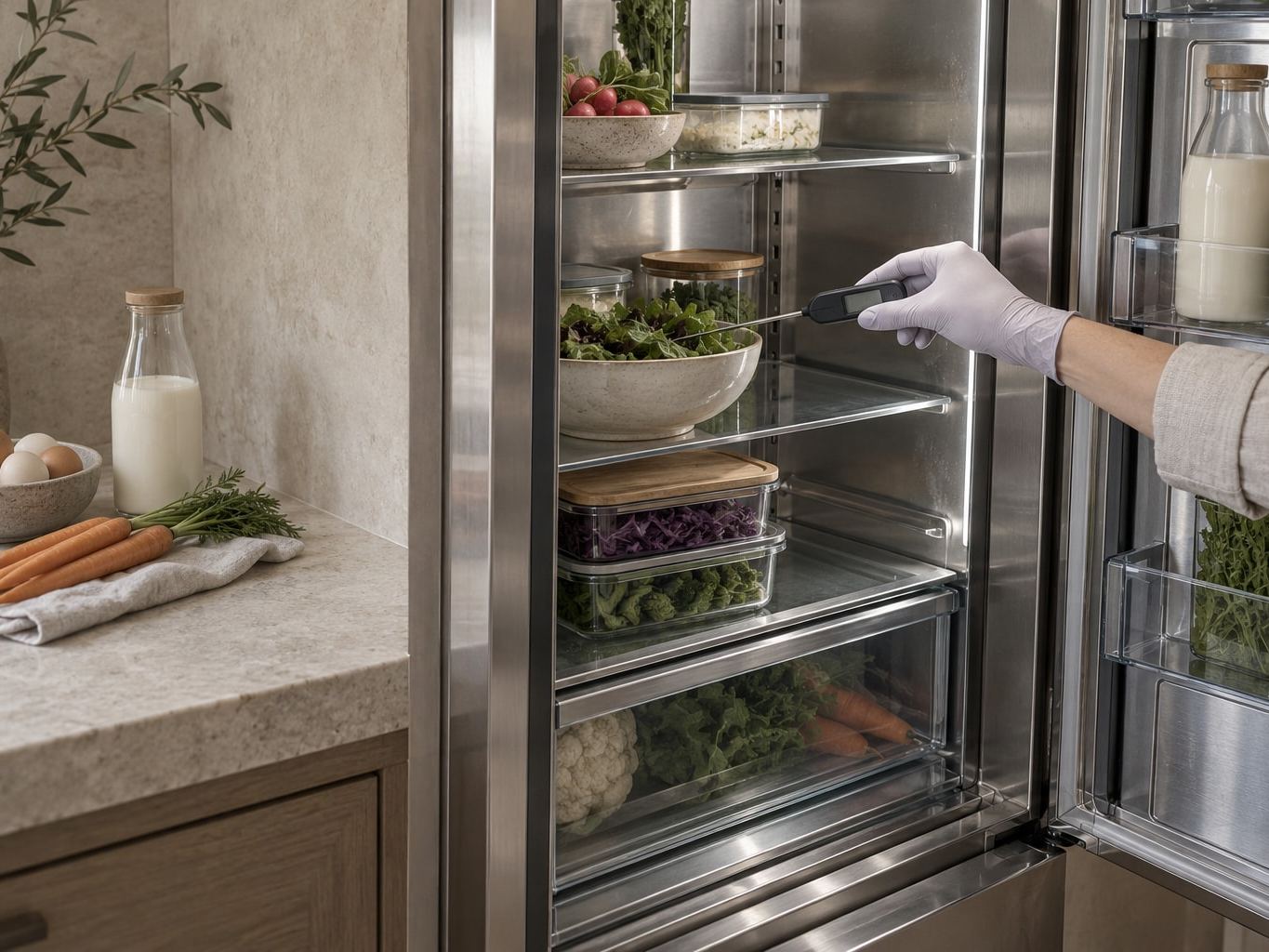
Soft butter and a sweating carton of milk are symptoms with many possible authors. A flattened seal, a coil furred over with lint, a sluggish fan, a sensor quietly misreporting and a circuit short of refrigerant can each write that same note, and from the kitchen side of the door they are nearly impossible to tell apart. Swapping components one after another until the warmth disappears is the costliest way to find out which one it was. Our technicians start somewhere quieter: probes left in both compartments while the machine runs, a palm held in the air leaving the condenser, an ear on the compressor as it cycles, and a slow pass around the gasket from hinge corner to handle side.
The cause gets named only once those observations line up, and the price of curing it comes with the name. You decide; no part leaves its box without your go-ahead. When the work is finished, the probes go back in, because a cabinet that seems cold while someone watches it is a different specimen from one that keeps its temperature through an evening of hungry teenagers and a dinner party.
Everything in the Sub-Zero cold family is handled this way: the classic built-in side-by-side and over-and-under models, single-temperature columns, and the panel-ready integrated units hidden behind cabinetry. Neighbouring trouble has its own pages, including freezer repair for frost and soft ice cream, wine storage repair for zones that wander, and ice maker repair for an empty bin. Worried that the compressor itself is failing? Our field note on compressor signs and causes lays out what we listen and measure for. Still deciding what should stand in that opening? Our notes on built-in versus freestanding refrigerators and on picking the right Sub-Zero model cover the buying side.
From your phone call to the closing measurement
Clock promises would be guesswork, since kitchens differ so much. These are the stages, in order.
-
Calling in
Tell us what the cabinet is doing, however you would put it. If the rating plate inside the fresh-food side is easy to reach, read us its model line; it helps the technician arrive thinking about the right machine. The booking goes into the earliest opening on the schedule, which now and then lands on the same day.
-
First look
With the toolbag still shut, the technician asks what changed and notices the cabinet as it stands: what the display says, how the doors hang, where frost has formed, what the compressor sounds like, and whether a basket or a runner is smothering the grille.
-
Field readings
Probes settle into both compartments, fans and compressor are watched through a full cycle, the coil is judged for dust and air movement, and the gasket is tested along every edge.
-
The verdict
You hear what the readings mean in ordinary language, which component or condition is at fault, and what fixing it costs, all before anything is ordered.
-
Mending
Once you agree, the repair goes ahead. If a component must be ordered, you are left with advice on keeping food safe until the return visit and a booked time for it.
-
Second readings
The probes return after the repair so you can watch the cabinet pull down and settle into ordinary on-off cycling yourself.
Why is my Sub-Zero refrigerator not cooling?
Four culprits account for most cases: lint packed into the condenser coil, a seal that has stopped gripping the frame, an evaporator fan turning lazily or not at all, or a control or start part that has failed. A refrigerant leak happens less often. Probe and airflow readings single out the guilty one ahead of any swap.
What the cabinet shows, and the usual suspect
Read these as leads rather than conclusions. One sign can point to two different faults, so measurement still decides.
-
Milk and leftovers lukewarm while ice cream stays rock hard
On models that chill each side independently, the fresh-food circuit, its fan or its sensor is in trouble and the freezer simply carries on
-
The compressor hums for long stretches and rarely rests
Heat trapped by a lint-heavy coil, room air seeping by the seal, or a refrigerant shortfall that leaves the system chasing a setpoint it never reaches
go to the note -
A puddle collecting beneath the crisper bins
Meltwater from the defrost cycle with nowhere to go, since the drain channel has silted up or iced shut
-
Droplets clinging to shelves and the door liner
Damp kitchen air leaking in past a seal that has stiffened, or a door that has drooped on its hinges
-
Interior lamp works, but the control panel is blank
An electronic fault in the board, its ribbon connection or its power feed, separate from the cooling itself
-
Repeated clicking from below while the cabinet keeps warming
A compressor that tries to kick on and stalls, typically a relay or overload part and occasionally the compressor
-
Frost creeping over the fresh-food liner at the back
A defrost fault, or air seeping around the door so its moisture freezes in the wrong place
Built-in, integrated or column: how the installation shapes the job
The refrigeration underneath is related, yet the way a unit is fitted into your cabinetry decides our route to it and what needs shielding along the way.
| Installation | Where the serviceable parts live | Our extra care |
|---|---|---|
| Classic built-in, stainless or panelled | Grille above the doors, hiding the condenser and a good share of the controls; the bulk of repairs are carried out without moving the cabinet | Anything stored on top moved aside first, cabinet faces kept free of tools |
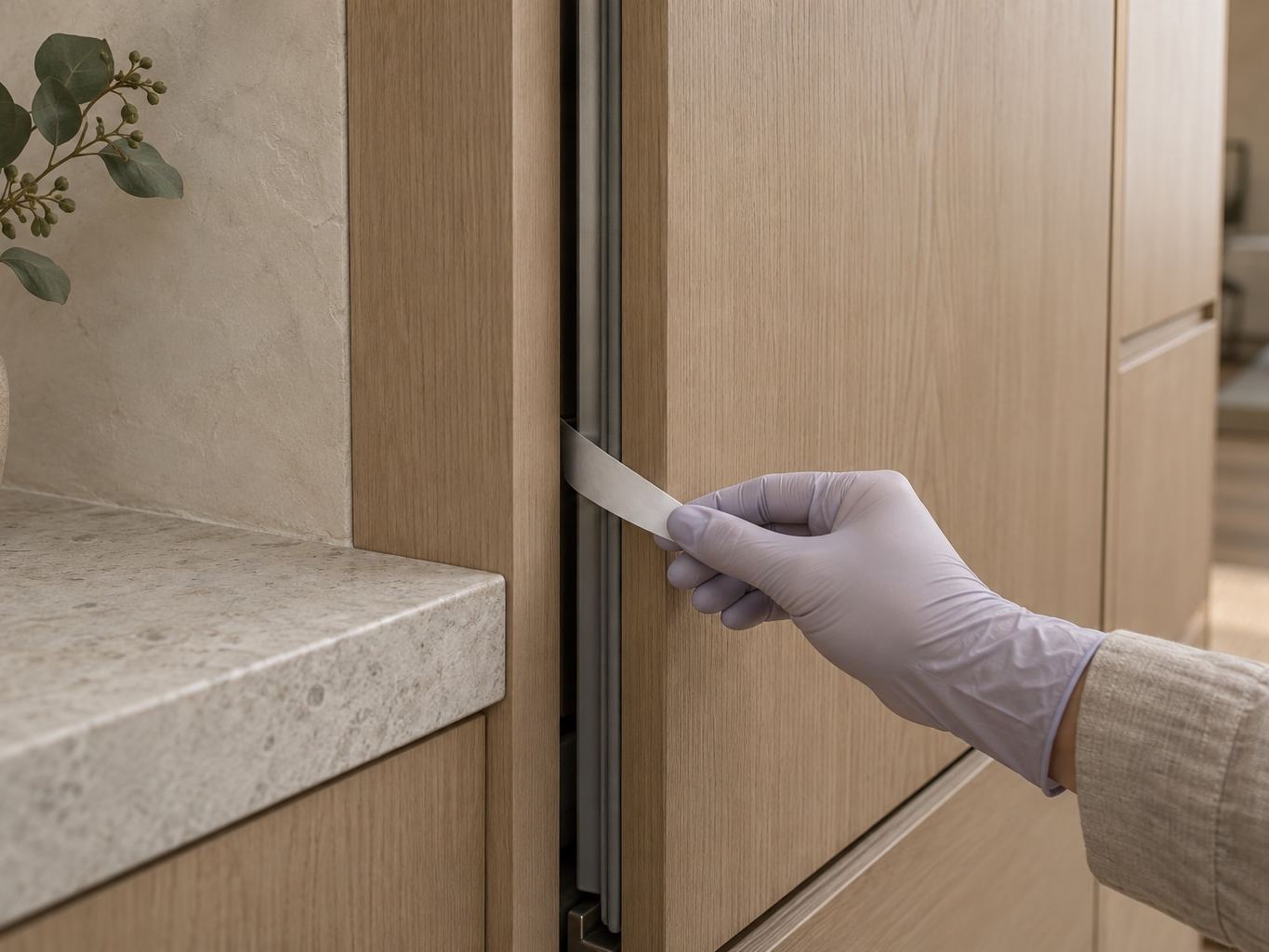
| Integrated, panel-ready | Grille at the top or low at the toe kick, according to the model; the unit sits flush in custom millwork wearing your own wood or painted fronts | Panels and hinge hardware handled gently, door reveals compared with the surrounding cabinetry once we finish |
| Single-temperature column | Each column carries a separate cooling system, often paired with a matching freezer or wine column alongside | Proving which column is at fault, since neighbours share a wall but never a circuit |
| A unit that has to come forward | Certain repairs mean easing the cabinet forward out of its niche | Flooring covered and a route agreed with you; you hear why before a single caster rolls |
Who does Sub-Zero refrigerator repair near me in Pacific Palisades and the Westside?
Palisades Appliance Care is based in Pacific Palisades and covers ten neighbouring places along the coast and across the Westside. Calls are accepted around the clock, house calls run every day of the week, and the $89 visit charge is credited against the repair. Ring (310) 928-9768 or reserve a visit.
Two beliefs that cost people a fridge full of food
-
MisidentifiedA freezer that is still frozen solid proves the refrigerator half is healthy and the warmth will pass.
Det.Plenty of Sub-Zero models chill the fresh-food side and the freezer independently, which means either half can give out while the other hums along untroubled. A cold freezer tells you nothing about the other door. Our explainer on dual refrigeration shows why the two halves act on their own.
-
MisidentifiedA colder setting is the cure for a warm cabinet.
Det.When a fan, a seal or a lint-covered coil is the culprit, a colder setting just makes the compressor labour longer against an unchanged problem. Put the control back where the manual for your model suggests, then get the true cause traced.
Questions owners put to us first
- Is an older built-in Sub-Zero worth fixing, or is it time to replace it?
- These refrigerators are designed around replaceable parts: seals, fans, sensors, valves, relays and boards. When the diagnosis is done you have an actual repair figure in hand, so weighing repair against a replacement becomes simple arithmetic instead of a hunch.
- What exactly does the $89 buy?
- The trip to your house and the diagnosis. It is billed once per trip, so a wine column or ice maker that also wants a look during the same trip adds nothing to it. Should you approve the work, that $89 disappears into the repair total. Our pricing page explains how repair figures are built.
- My Sub-Zero feels cold inside, so why does it seem to run all the time?
- A cabinet can hold its temperature and still be overworking to do so. Lint on the coil, a seal admitting a faint draft, or a kitchen that has grown much hotter all stretch out the compressor's run time. Catching that early spares the compressor years of extra strain.
- Am I allowed to vacuum the condenser coil on my own?
- On many models, yes. Switch the refrigerator off, lift away the grille, and lift loose lint away using a vacuum fitted with its softest brush. The owner's guide shows where your coil sits. Keep metal tools away from the fins, and leave anything beyond surface dust for a technician.
- Will you travel to my neighbourhood?
- Every place we cover gets the same service: Pacific Palisades, Castellammare, the Riviera, Topanga, Malibu, Santa Monica, Brentwood, Mar Vista, Westwood, Century City and Beverly Hills. Every one of those pages explains how the local houses, roads and weather change the visit.
Why is my Sub-Zero running constantly?
A compressor that barely rests is usually losing a fight with heat, either unable to shed it through a dusty coil or a feeble condenser fan, or letting it in through a tired seal. Low refrigerant does the same. Clear the grille, confirm the doors shut firmly, and if the running continues, book a measured diagnosis.
Let us take the readings
Phone the moment you notice it, midday or midnight, and you will be offered the first opening we have. Have the rating plate within reach if you can. Every way of reaching us sits on the contact page.
$89 per visit, billed once for each trip to your home, even when the technician opens up several cold units on that trip; every cent of it is subtracted from the final invoice once you approve the fix.